





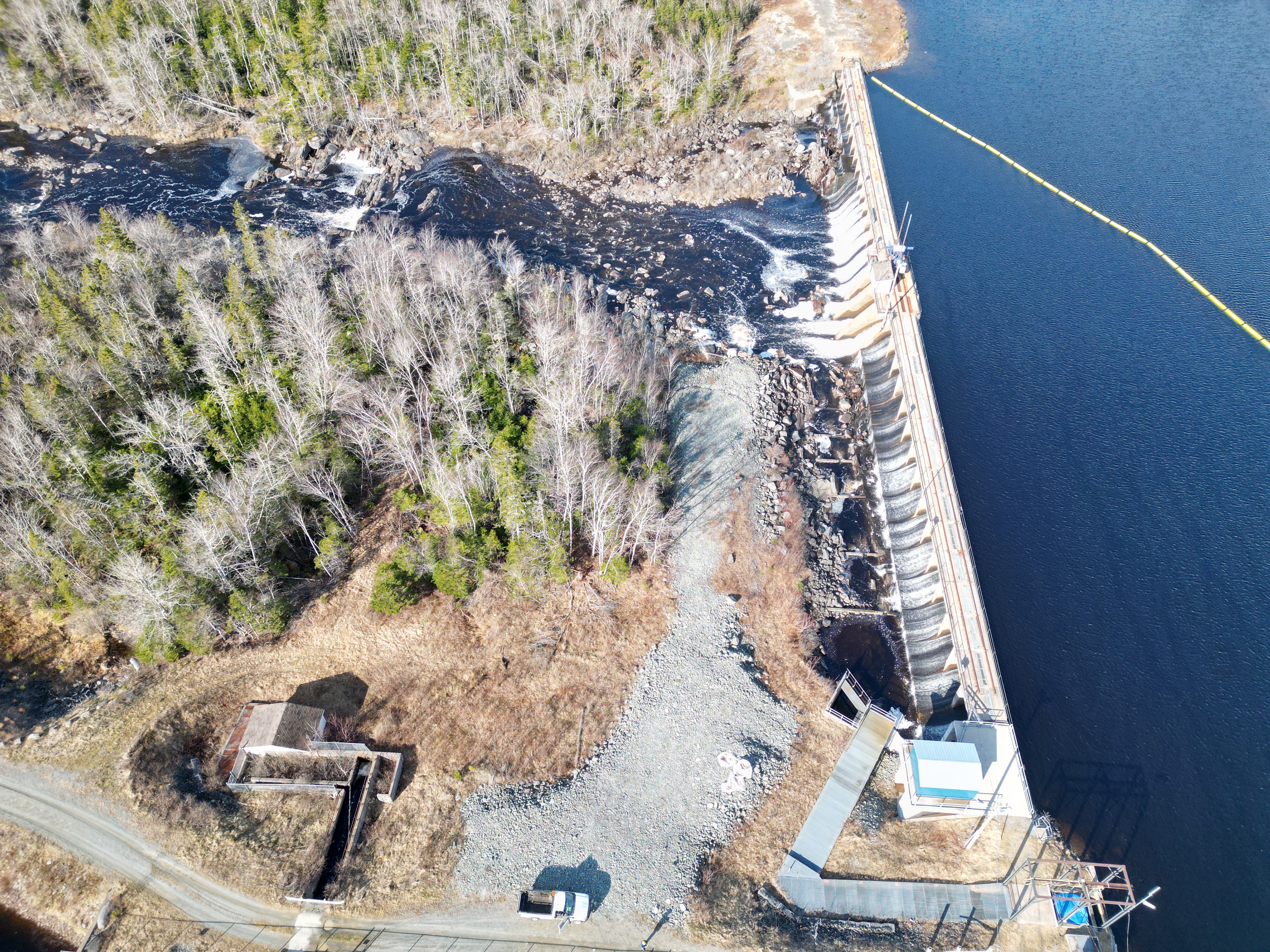



Ruth Falls

The Ruth Falls Dam Refurbishment Project


The Sheet Harbour Hydro System, including generation at Malay Falls and Ruth Falls has been providing clean, renewable and reliable electricity to Nova Scotians for nearly one hundred years.

Nova Scotia Power is currently completing upgrades to the system located at Ruth Falls. The focus of this project is to bring the dam up to current Canadian Dam Association standards and meet the requirements of Nova Scotia Environment and Climate Change (NSECC) approval for the water withdrawal on the Sheet Harbour Hydro System.

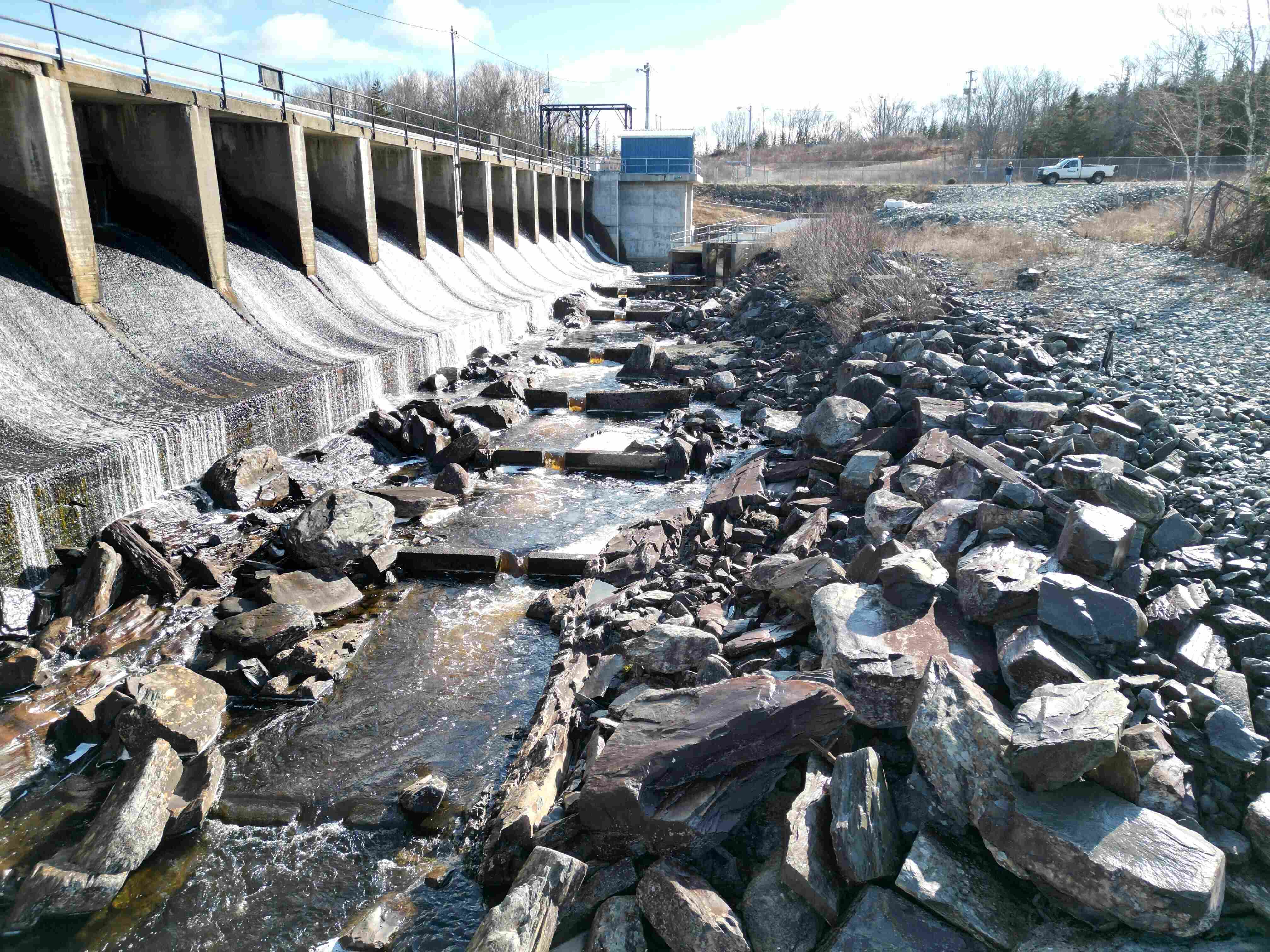
Water from the Ruth Falls Dam running over rocks.


Scope of Work


The upgrades to the Ruth Falls system includes:

  • Replacing 30 stoplog bays with 7 rubber dam sections and one free overflow spillway section.
  • Replacing 3 deep stoplog bays with 3 vertical lift gates.
  • Refacing of the concrete spillway surface
  • Construction of a new steel walkway platform across the length of the dam.
  • Improvements to the existing upstream fishway, downstream louvre system, and addition of the new upstream eel ramp.
  • Expansion of the concrete deck to accommodate a new rubber dam controls building.
  • Replacement of a retaining wall to accommodate the overflow spillway.
NSP_Site_Icon_Lightbulb_Grey_85x85 NSP_Site_Icon_Lightbulb_GreyYellow_85x85

Timeline Update

During construction, crews identified several unforeseen onsite conditions once the reservoir was drained. These findings required design changes and additional work.

Weather has also affected progress, with fall rain and significant winter snow limiting access and slowing productivity. As a result, the original March 31, 2026 completion date is no longer achievable, and construction will extend to September 2026.


Project Timeline


Ruth Falls Dam
  • May 14, 2025: General contractor mobilization to site
  • May 15, 2025 - July 21, 2025: Preparatory work that does not require reservoir drawdown
  • July 21, 2025 - July 28, 2025: Ruth Falls reservoir drawdown
  • July 28, 2025 – September 2026: Dam refurbishment construction activities
  • September 2026: Ruth Falls reservoir water up
  • September 2026 – October 2026: Demobilization and site clean-up


Environmental Considerations


We are committed to protecting the environment, fish and fish habitat.

Permits and Inspection
We have acquired a Nova Scotia Environment (NSE) Watercourse Alteration Approval, Fisheries and Oceans Canada (DFO) Fisheries Act Authorization and Transport Canada Navigable Waters Permit to complete the work.
As part of the regulatory permitting process, we are working with the Confederacy of Mainland Mi’kmaq and MacInnis Natural Resources Services Inc. on a habitat offsetting project on the St. Mary’s River in Guysborough County. This is to support ongoing Atlantic salmon recovery efforts.
Registration
We have developed an extensive environmental protection plan and water management plan for this project, including measures to address erosion and sedimentation and upstream fish migration.
Nova Scotia Power operates its hydro systems and maintains water levels as set out under the requirements of the Nova Scotia Department of Environment and Climate Change (NSECC).

Water Levels

To complete this work safely, Nova Scotia Power has lowered the water levels of the Ruth Falls head pond by approximately 18 feet, through a gradual drawdown completed the week of July 28, 2025.

Water levels will remain at this level throughout the summer 2026, depending on weather and construction progress.

Why do we have to lower the water levels?
  • The Nova Scotia Environment and Climate Change (NSECC) Watercourse Alteration Approval granted for the work requires that all work performed in the head pond be completed on a dry construction area.
  • The safest way for both persons performing the work and the environment is to lower the head pond.

Why does the water levels have to be lowered for so long?

  • The head pond is expected to be lowered for about 9 months while construction is happening on the dam.
  • During construction, Nova Scotia Power crews will be regularly monitoring the shoreline, performing surveys and archaeological investigations.
  • From a construction perspective, the summer and fall is the best time to perform the work required.
  • The timing is also influenced by maintaining water levels until the upstream migration of gaspereau is completed


Community Engagement


 Nova Scotia Power has been engaging with rightsholders and stakeholders throughout the planning of the project. Regular communication has been upheld with the following key rightsholders and stakeholders, managed by our project team:

Nova Scotia Environment and Climate Change
Department of Fisheries and Oceans
Department of Natural Resources
Transport Canada
Nova Scotia Office of L’nu Affairs
Kwikmu’kw Maw-klusuaqn (KMKNO)
Millbrook First Nation
Sipekne’katik First Nation

Ruth Falls Project – Resident Q&A


What work has been completed so far on the Ruth Falls project?

Construction has been underway since July 2025, and crews have made significant progress. Completed work includes:

  • New access roads
  • Demolition and construction of the east spillway
  • Demolition and partial construction of the west spillway
  • Construction of the west retaining wall
  • Completion of both the east and west sluice bays
  • Preparatory work for fish passage upgrades including rock breaking

These steps form the foundation of the upgraded dam structure.

Why is the project delayed?

Once the reservoir was drawn down, crews encountered several conditions could not be fully assessed earlier due to water elevations. These included:

  • Depth and precise location of bedrock along the dam and fish passage
  • Condition of the concrete below the water line

These findings required adjustments to the design and additional construction work. Major weather events, including a significant rain event in November and heavy snow events throughout the winter also contributed to construction delays.

What is the new expected project timeline?

The original completion target of March 31, 2026 is no longer achievable, which means the water levels at the Ruth Falls Headpond will remain lowered for an extended period.

Work will continue through the spring and is now expected to extend throughout summer 2026, depending on conditions. Spring flooding may also temporarily slow certain activities. Until the dam structure / fish passage are fully operational, Nova Scotia Power is required to keep the Ruth Falls Headpond in a lowered state.

What work is still left to be completed?

Remaining work includes:

  • Building the east spillway piers
  • Completing the west spillway bays and piers
  • Installing the rubber dams
  • Constructing the center sluice bay
  • Upgrades to existing fish passage
  • Addition of new eel passage

What is NS Power doing to keep the project moving?

To help maintain momentum, Nova Scotia Power is:

  • Adjusting the construction sequence
  • Prioritizing completion of the main dam structure first
  • Extending workdays and increasing weekend work
  • Coordinating closely with snow, access, and environmental teams

Will fish passage be affected?

Nova Scotia Power is working closely with Fisheries and Oceans Canada (DFO) to minimize impacts and compensate for residual impacts to fish passage.

Work on the upgraded fish passagewhich includes upgrades to the upstream fishway, downstream bypass, and installation of an eel ramp will continue as the main dam work progresses. Once the headpond is rewatered and the upgrades are complete, fish passage will be reinstated.

Are permits being updated?

Yes. Nova Scotia Power is seeking:

  • An extension to drawdown activities through its Fisheries Authorization Act

These updates reflect the adjusted schedule and construction sequence.

Will there be disruptions for residents?

Construction will continue through the spring and into the summer, and residents should expect ongoing impacts beyond general construction traffic. These include:

  • Construction activity and access: Increased equipment on site, periodic traffic delays, active work on some weekends, and occasional noise. We’ll work to minimize disruption and provide notice where possible.
  • Water supply follow‑up: We will re‑instate water supply support for local residents living along the Ruth Falls reservoir whose wells were impacted by the water draw-down. Our team will reach out directly to affected households with next steps and timing.
  • Recreational access constraints: Access to the reservoir will be limited while water levels remain lowered. Property owners may choose not to install floating docks or launch boats due to lower water levels and shoreline conditions.
  • Continued shoreline exposure: Lower water levels may expose organic material along the shoreline. We’ll monitor conditions and address issues where feasible.

How will residents stay informed?

We will continue providing regular updates as construction progresses and schedules evolve.
If major changes arise, we will share them promptly with the community through community letters, our project webpage (nspower.ca/ruthfalls), and email updates. To be added to our update list, please email engage@nspower.ca.

Who can I contact if I have questions?

Residents are encouraged to reach out anytime at engage@nspower.ca. We’re here to help and appreciate your patience as we work through the remaining stages of this important project.